36V LED Strip Lights | Low Voltage Drop | DENO
DENO 36V LED strip lights are engineered for longer commercial and architectural runs where reducing current and end-of-run brightness loss is important. The range includes high-density 2216, 2835 and regulated configurations with multiple PCB widths, power levels and cut intervals. Compared with an equivalent 24V load, a 36V system can reduce current for the same power, helping cable and voltage-drop planning. Final run length still depends on wattage, copper weight, feed method and installation temperature. OEM buyers can specify CCT, CRI, waterproofing, reel length and packaging.
36V SMD Strips models & key specifications (5)
15098-N — 2216 · 312 LEDs/m · 36V

LED Type: 2216 · LED Density: 312 · CCT: 1800–6500K · CRI: Ra≥90 · Voltage: 36V · Power: 4~18W · Cutting Unit: 12LEDs/38.46mm · PCB Width: 10 · Copper Foil: 3oz · Circuit Type: C.V. · IP Rating: IP20/IP65/IP67/IP68
63850 — 2835 · 90 LEDs/m · 36V

LED Type: 2835 · LED Density: 90LEDs/m · Voltage: DC 36V · Cutting Unit: 9LEDs/100mm · PCB Width: 10 mm · Copper Foil: 3oz · Circuit Type: C.C. · IP Rating: IP20
15079-N — 2216 · 312 LEDs/m · 36V
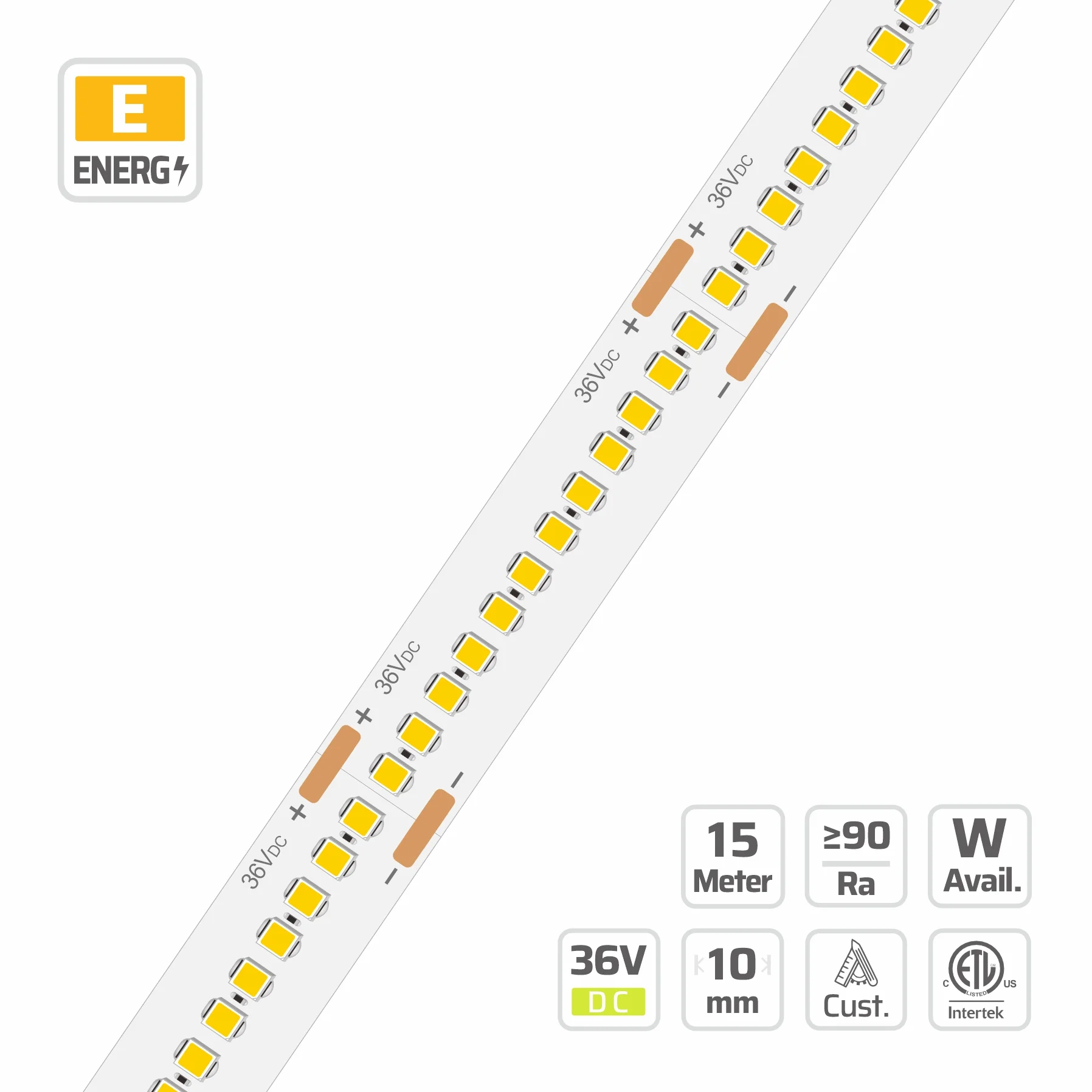
LED Type: 2216 · LED Density: 312 LEDs/m · CCT: 1800–6500K · CRI: Ra≥90 · Voltage: 36V · Power: 4~20W · Cutting Unit: 12LEDs/38.462mm · PCB Width: 10 · Copper Foil: 3oz · Circuit Type: C.V. · IP Rating: IP20/IP65/IP67/IP68
4991 — 3528 · 90 LEDs/m · 36V

LED Type: 3528 · LED Density: 90 · CCT: 2700-6500 · CRI: Ra≥80 · Voltage: 36V · Power: 1.8~7.2W · Cutting Unit: 9LEDs/100mm · PCB Width: 12mm · Copper Foil: 3 oz · Circuit Type: CC · IP Rating: IP20/IP65/IP67/IP68
5217 — 2835 · 90 LEDs/m · 36V
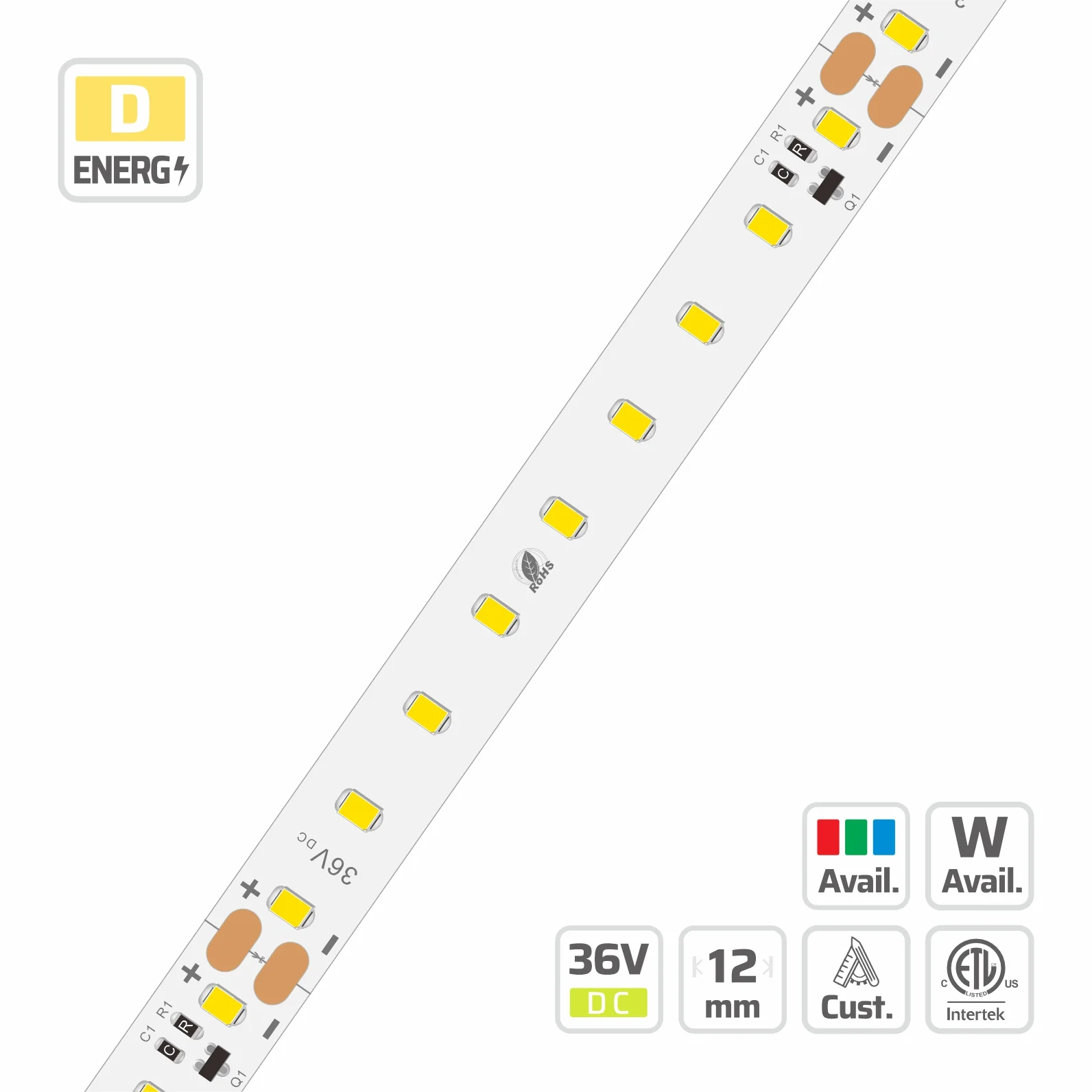
LED Type: 2835 · LED Density: 90 LEDs/m · CCT: 1800–6500K · CRI: Ra≥90 · Voltage: 36V · Power: 3.6~22W · Cutting Unit: 9LEDs/100mm · PCB Width: 12 mm · Copper Foil: 3oz · Circuit Type: C.C. · IP Rating: IP20
Other SMD LED Strip series
- 1515 SMD LED Strips
- 5054 SMD LED Strips
- 2020 SMD LED Strips
- 1608 SMD LED Strips
- 3014 SMD LED Strips
- 2835 SMD LED Strips
- 3535 SMD LED Strips
- 6060 SMD LED Strips
- 5050 SMD LED Strips
- 3528 SMD LED Strips
- 2216 SMD LED Strips
- 2110 SMD LED Strips
- 3030 SMD LED Strips
- 0807 SMD LED Strips
- 3838 SMD LED Strips
- 5630 SMD LED Strips
- Full Spectrum Violet Excitation SMD Strips
- 1 SDCM SMD Strips
- Selectable Power LED Strips
- High Efficiency LED Strips
- DENO WAP™ SMD Strips
- Full Spectrum SMD Strips
- Special SMD Strips
- Roll-to-Roll SMD Strips
- Built in IC SMD Strips
- C.C. SMD Strips (IC Regulated)
- Marine Grade SMD Strips
- High Density LED Strips
- Ultra-Narrow SMD Strips
- Wide SMD Strips
- Pixel SMD Strips
- Long LED Strip Lights
- Side Emitting LED Strips
- Automotive SMD Strip
- SMD Strips with Lenses
- Dim To Warm SMD Strips
- S-Bend SMD Strips
- Micro-Cut SMD Strips
- Classic SMD Strips
- RGBW LED Strips
- RGB SMD Strips
- CCT SMD Strips
- CCT SMD Strips ( 1 Loop )
- 48V SMD Strips
36V LED Strip Lights — Buyer Questions
Why choose a 36V LED strip over 12V or 24V?
Current, not brightness, is what limits a run. At the same wattage a 36V board draws one third of the current of a 12V board and two thirds of a 24V one, so the copper loses far less voltage along the tape. That is why the 36V models here are rated for 8 m to 30 m from a single feed, where a comparable 24V board is usually rated 5 m. 36V stays inside SELV, so it uses ordinary low-voltage wiring practice.
- Guide run the voltage-drop comparison yourself
- Related series long-run architectural layouts
- Product 15079-N 36V board
How far can 36V LED strip lights run on one feed?
It depends on the circuit. The constant-current 3528 and 2835 boards at 90 LEDs/m (#4991, #63850) are rated 30 m fed from one end and 60 m fed from both; #5217 is rated 25 m. The constant-voltage 2216 boards at 312 LEDs/m are denser and therefore shorter: 15 m single-feed on #15079-N and 8 m on #15098-N, doubling with a second feed.
- Guide check single-end versus both-ends feeding
- Related series 48V boards when 30 m is still not enough
- Product 4991 long-run 36V board
Constant current or constant voltage at 36 volts?
Constant-current boards carry a regulator IC per segment, so brightness stays flat from the first metre to the last and the run tolerates mains fluctuation — that is what allows the 30 m rating on #63850. Constant-voltage boards are simpler and cheaper and make sense where the run is short and dense, as on the 312 LEDs/m 2216 models. Both are dimmable with a PWM driver.
- Related series constant current LED strip boards
- Guide flicker and PWM frequency reference
- Product 63850 constant-current 36V board
What density and output can a 36 volt board deliver?
Two layouts cover most work. The 2216 boards run 312 LEDs/m at 10 mm width, 4 to 20 W/m, Ra 90+, with 1233 lm/m measured at 4000K and a 38.46 mm cut unit — dense enough for a dot-free cove. The 3528 and 2835 boards run 90 LEDs/m at 10 to 12 mm width, 1.8 to 22 W/m, with a 100 mm cut unit, and are built for distance rather than density.
- Related series 2216 boards at 312 LEDs per metre
- Related series lm/W across the SMD range
- Product 15098-N 312 LEDs/m 36V board
Which driver and dimming system does a 36 volt run need?
A constant-voltage 36V driver sized with about 20% headroom over the connected load, or a matched constant-current driver for the CC boards. Control is standard PWM: TRIAC, 0–10V, DALI and DMX decoders all work provided the output is 36V. Use a PWM frequency above 3 kHz for camera-facing rooms, and keep the driver at one end of the run so the feed distance matches the rating.
- Guide size the driver for a 36 volt circuit
- Related series controllers and dimming accessories
- Product 5217 dimmable 36V board
Can a 36 volt board be built to a custom specification?
Yes. LED type and pitch, PCB width and copper weight, cut unit, IP class, reel length and connector type are all configurable on the 36V platform, including CCT-tunable and high-CRI variants. DENO manufactures the FPCB in-house, so a 36V layout is tooled from an existing stack-up rather than quoted as a new product line.