SOB 48V LED Strip Light — 15m Dot-Free Run | DENO
The SOB 48V LED strip family from DENO LED offers advanced dot-free illumination for professional applications. Operating at a nominal 48V DC, these strips feature high CRI (Ra>90) for accurate color rendering and utilize SOB (System-on-Board) technology for uniform light distribution. Available in various power densities, they are suitable for long-run installations in architectural lighting, display cases, and cove lighting where voltage drop minimization and seamless light lines are critical. Custom lengths and specifications are available for OEM/ODM projects.
SOB 48V LED Strips models & key specifications (2)
15927 — SOB · 300 LEDs/m · 48V
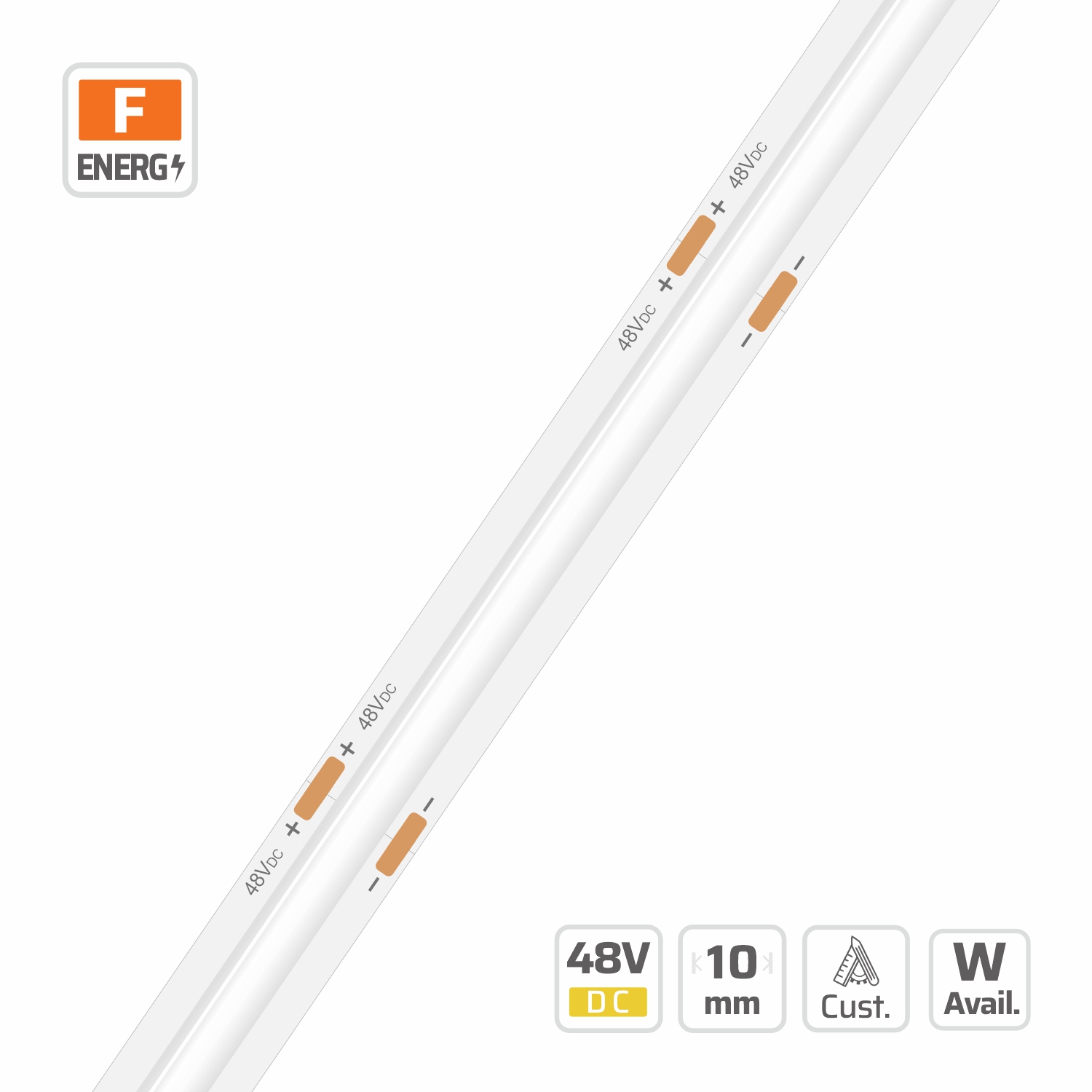
LED Type: SOB · LED Density: 300 LEDs/m · CRI: Ra≥90 / Ra≥95 · Voltage: 48V · Power: 4.8~19.2W · Cutting Unit: 15LEDs/50mm · PCB Width: 10mm · Copper Foil: 3oz · Circuit Type: C.C. · IP Rating: IP20/IP66
15926 — SOB · 300 LEDs/m · 48V
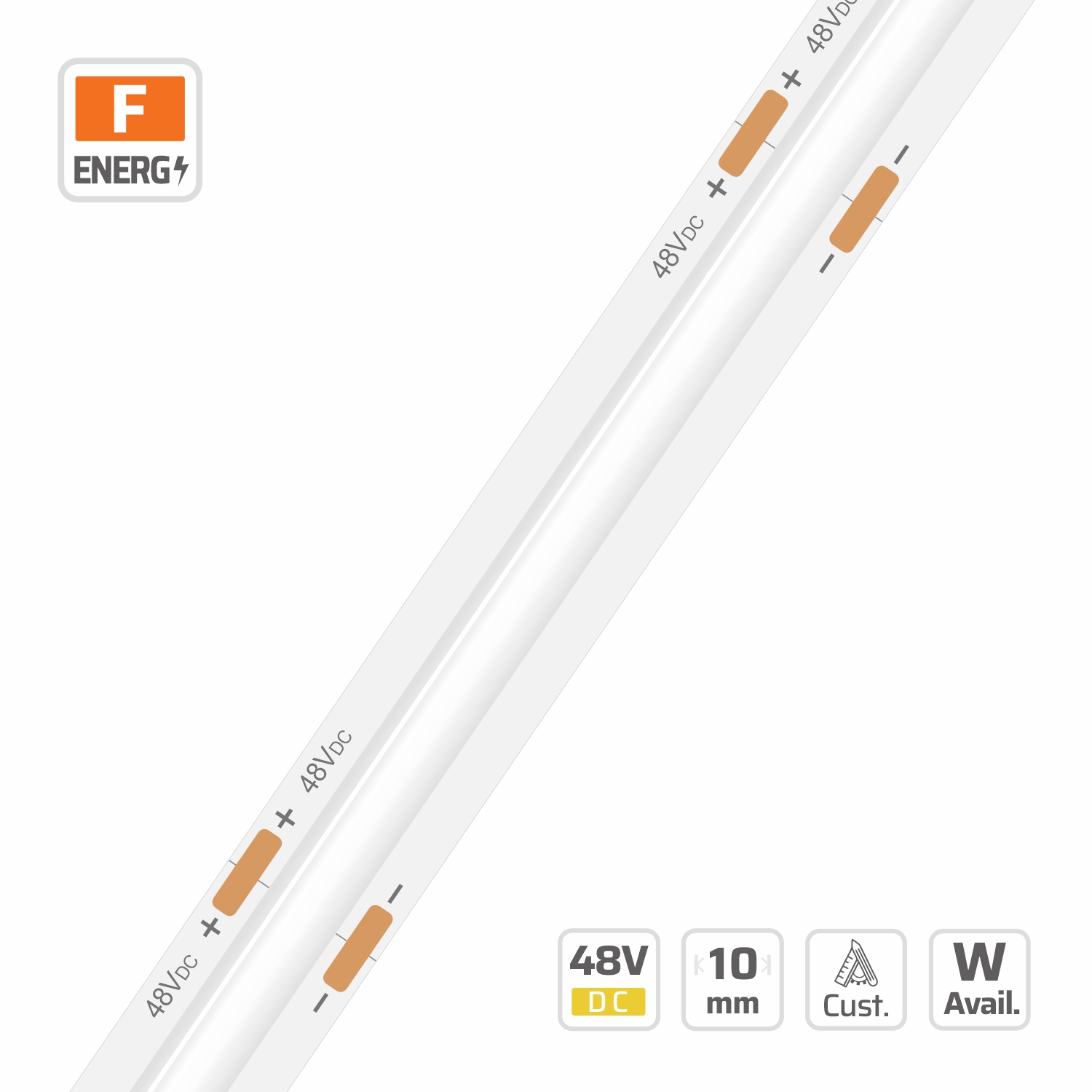
LED Type: SOB · LED Density: 300 LEDs/m · CRI: Ra≥90 / Ra≥95 · Voltage: 48V · Power: 4.8~19.2W · Cutting Unit: 15LEDs/50mm · PCB Width: 10 · Copper Foil: 3oz · Circuit Type: CV (Resistor Based) · IP Rating: IP20/IP54/IP65/IP66/IP67/IP68
Other SOB LED Strip series
48V LED Strip — Buyer Questions
How long is a 48V long run LED strip — 30m or 50m?
The 48V SOB boards carry 300 LEDs/m at 4.8–19.2W/m Achievable single-feed and both-ends run lengths are model-specific and listed per product; longer lines are built as multiple circuits rather than one electrically continuous line.
- Guide calculate the 48V run length
- Related series long run boards across voltages
- Product 15926 48V long-run board
48V vs 24V LED strip — which should I specify?
24V is right for anything under about 10 m and has the widest choice of drivers and controllers. 48V halves the current again, so it wins on long architectural and commercial lines where feed positions are expensive: fewer power supplies, thinner cable, less volt drop.
- Guide voltage and construction compared
- Related series 36V as the middle option
- Product 15927 48V versus 24V board
Is the 48V version constant current with no voltage drop?
The 15927 is the constant-current build — each 50 mm segment regulates itself, so brightness is flat head to tail. The 15926 is the constant-voltage equivalent for shorter runs on an existing 48V supply.
- Related series constant current LED strip explained
- Guide verify the feed plan
Why do commercial and architectural jobs use 48V dot-free strip?
Airport concourses, retail malls, atrium perimeters and long façade details all need continuous illuminated lines measured in tens of metres. A 48V dot-free single-feed run gives an unbroken visual line with a fraction of the electrical infrastructure of 24V tape.
Is 48V still extra-low voltage for installation purposes?
48V DC sits at the top of the SELV band and is still treated as extra-low voltage, so it keeps the installation advantages of low-voltage tape while behaving electrically much more like a mains-fed linear fixture over long distances.