RGB LED Wall Washer Lights | DENO OEM Manufacturer
The RGB LED wall washer strip is a specialized linear lighting solution designed for architectural and accent illumination, projecting dynamic color washes onto vertical surfaces. DENO LED offers 24V models with high CRI, ensuring accurate color rendering. These strips feature robust construction suitable for both indoor and outdoor applications, with custom OEM lengths available to meet project specifications. Key applications include building facades, landscape lighting, and interior accent lighting in commercial and hospitality environments.
RGB models & key specifications (3)
16693 — 3030 · 48 LEDs/m · 24V
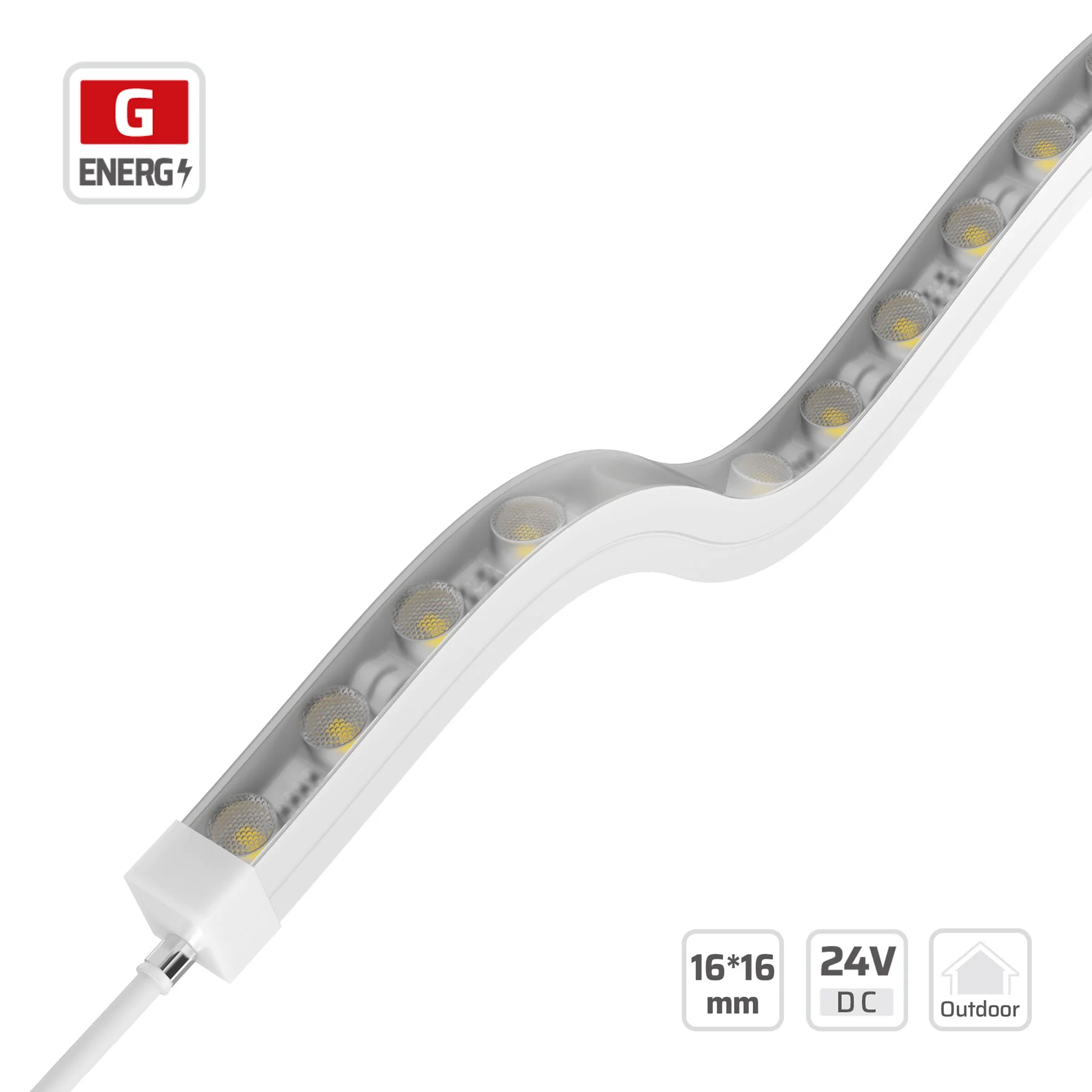
LED Type: 3030 · LED Density: 48 · Voltage: 24V · Power: 8~24W · Cutting Unit: 6LEDs/125mm · PCB Width: 12mm · Copper Foil: 2oz · Circuit Type: CV
15556 — 5054 · 24 LEDs/m · 24V
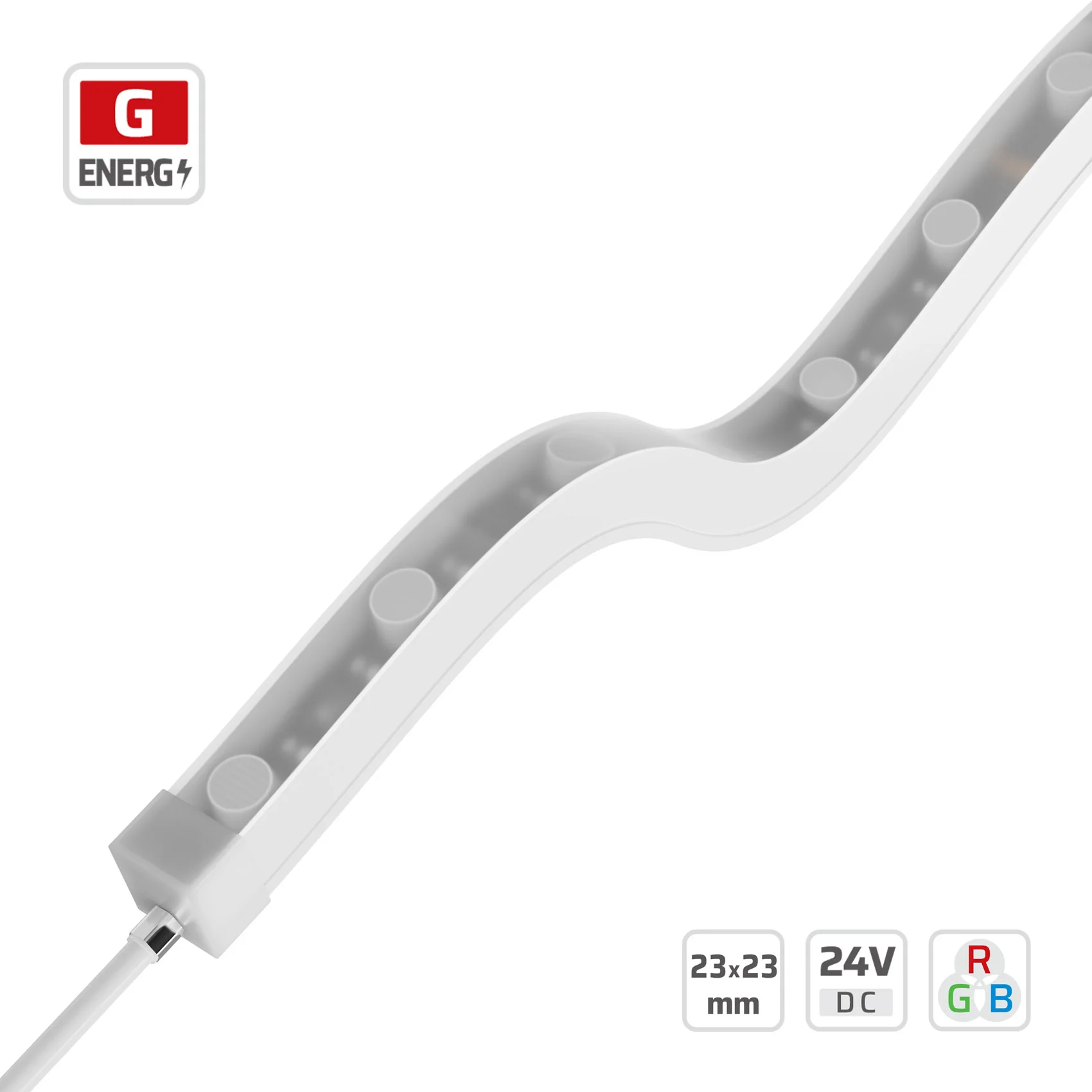
LED Type: 5054 · LED Density: 24 · Voltage: 24V · Power: 21 W/m · Cutting Unit: 6LEDs/270mm · PCB Width: 15mm · Copper Foil: 2oz · Circuit Type: CV · IP Rating: IP65
11281 — 3030 · 24 LEDs/m · 24V
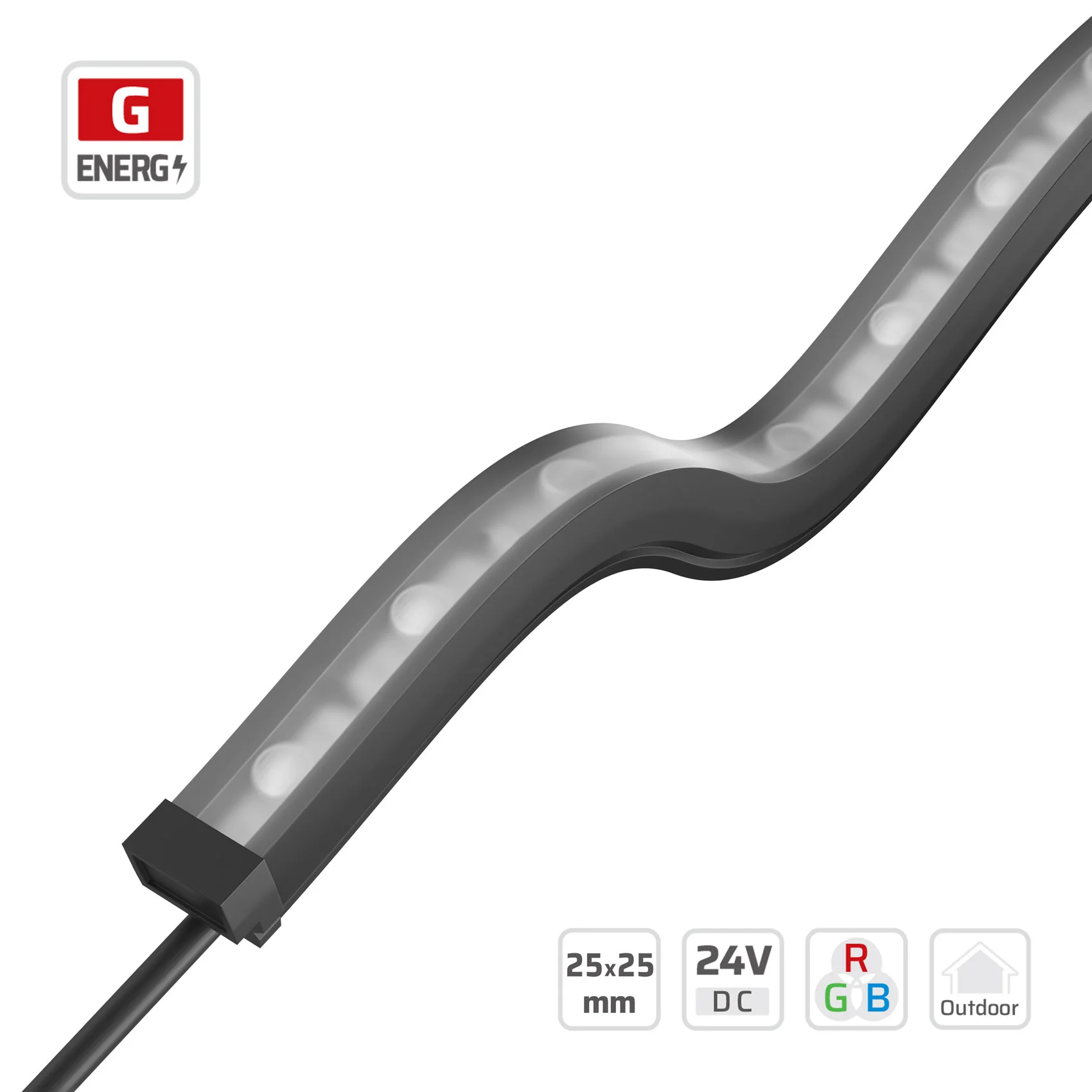
LED Type: 3030 · LED Density: 24 · Voltage: 24V · Power: 21 W/m · Cutting Unit: 6LEDs/250mm · PCB Width: 18.4mm · Copper Foil: 2oz · Circuit Type: CV · IP Rating: IP65
Other LED Wall Washer series
RGB LED Strip Lights — Buyer Questions
What is the difference between RGB and RGBW LED strip lights?
An RGB LED strip mixes red, green and blue dies to produce colour, and its 'white' is a mix that always carries a colour cast. RGBW LED strip lights add a dedicated white die — 2700K to 6500K, Ra 90+ — so the same run can deliver usable architectural white and saturated colour scenes without a second channel of tape.
- Series RGB LED strip lights series
- Related series RGBW LED strip lights with dedicated white channel
- Related series full spectrum LED strip for high-CRI white
Should I use a 12V or 24V RGB LED strip?
24V is the default for architectural work: at the same wattage it draws half the current of 12V, so a single feed covers 5–10 m without visible colour shift at the far end. 12V RGB LED strip is reserved for short cabinet, furniture and vehicle runs where the driver or controller is 12V-native.
- Series RGB LED strip lights series
- Guide check voltage drop on a 12V vs 24V RGB run
- Related series constant current RGB boards for long feeds
- Product 11281 24V RGB LED strip
Can an RGB LED strip be dot-free?
Yes, if the LED pitch is tight enough for the three dies to blend before the light leaves the diffuser. DENO builds high-density RGB boards at 2.1–4.2 mm pitch, which removes both the dot pattern and the rainbow fringing typical of 60 LEDs/m colour tape in shallow profiles.
Do you make an outdoor waterproof RGB LED strip?
Yes. RGB builds are available IP65 silicone-coated, IP67 sleeved and IP68 fully potted, plus DENO WAP™ conformal coating that stays clear and flexible instead of yellowing. Marine-grade variants add salt-spray resistant terminations for dock and yacht installations.
- Series RGB LED strip lights series
- Related series marine grade LED strip for outdoor colour runs
- Related series long-run outdoor LED strip layouts
- Product 15556 waterproof RGB LED strip
How is an RGB LED strip controlled — DMX, DALI or a standard controller?
Common RGB tape is a 4-pin constant-voltage load, so it works with any PWM controller: standard RF/Wi-Fi controllers, 0–10V, DALI DT8 or DMX512 decoders. Choose a driver and decoder with at least 1 kHz PWM (16 kHz for camera-facing work) to keep the run flicker-free on video.
- Series RGB LED strip lights series
- Related series pixel addressable LED strip for per-LED control
- Guide flicker, Pst LM and SVM reference data
- Product 16693 RGB LED strip
Can I order a custom RGB LED strip?
Yes — LED count, pitch, PCB width from 5 mm, copper weight, cut unit, IP class and connector type are all configurable, including RGB+CCT (five-channel) and mixed RGB/white layouts. DENO is a manufacturer, so a non-standard colour build is tooled from an existing FPCB stack-up rather than quoted as a new product line.
- Series RGB LED strip lights series
- Related series custom LED strip lights built to order
- Guide send an RGB LED strip specification to DENO