2835 Roll-to-Roll Long Reel LED Strip Light (#16771)
5mm · 12V · 120LEDs · 25mm/cut
Model: 16771
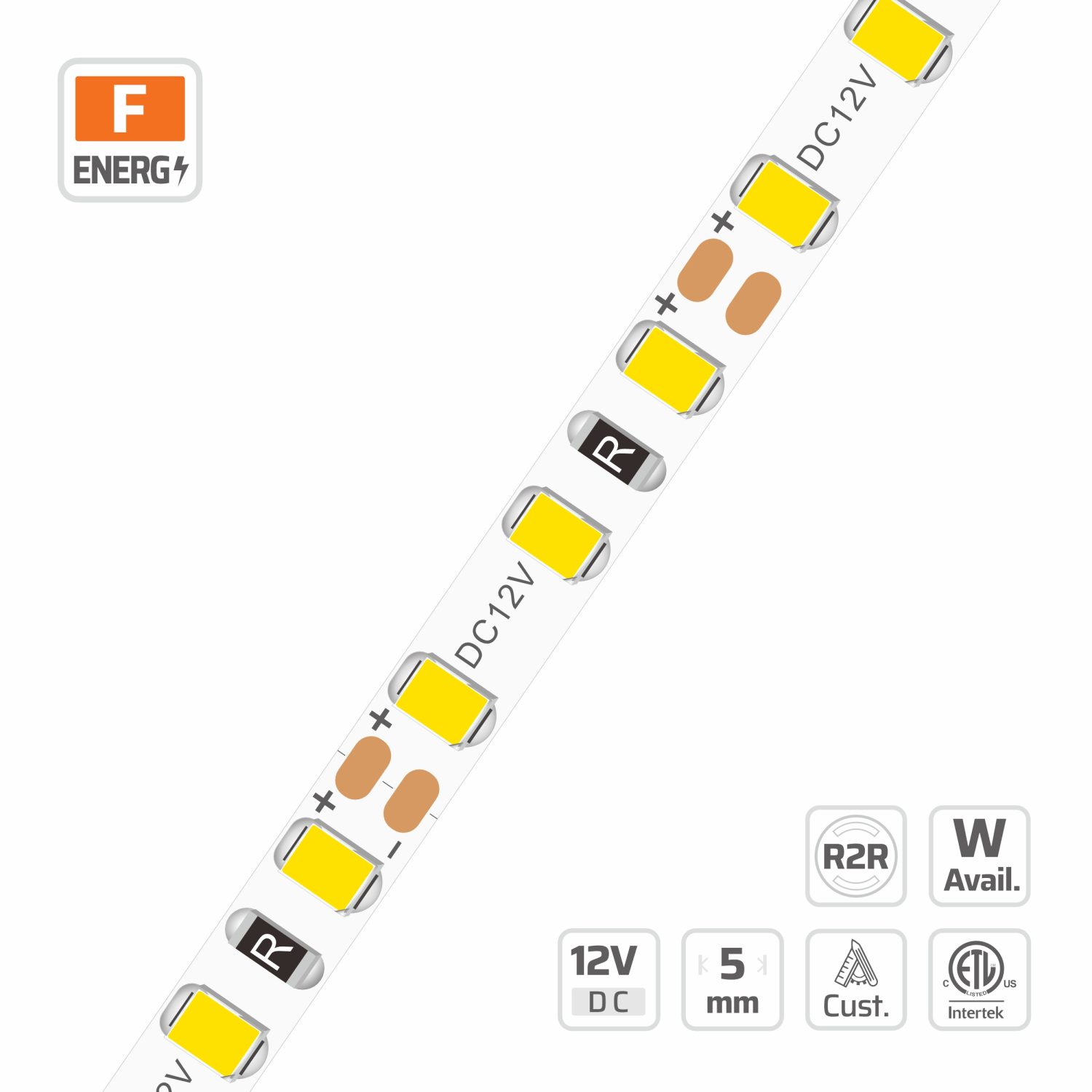
Overview
Roll-to-Roll Long Reel LED Strip Light | 5mm | 12V | 120LEDs | 25mm/cut | #16771 is part of the DENO Ultra-Narrow SMD Strips series, engineered around ultra narrow LED strip. Key specifications: 2835, 120 LEDs/m, DC 12V, 5mm PCB, 2oz copper FPCB, cuttable 3LEDs/25mm. Every reel is produced on DENO's roll-to-roll line with 99.9% pure copper FPCB and ships CE, UL and RoHS compliant for architectural, retail and hospitality projects. OEM and ODM configurations of length, colour temperature and waterproofing are available on request. This model uses DENO's electroplated, non-die-cut R2R FPCB, with no intermediate PCB splice joints inside the specified continuous length. Cutting interval, rated run length and planned feed positions remain model-specific.
Description
Built on DENO's electroplated, non-die-cut R2R FPCB, this model has no intermediate PCB splice joints within its specified continuous length. Cutting interval, rated run length and feed positions remain model-specific.\nRoll-to-roll manufacturing keeps the electroplated FPCB continuous, so the reel carries no intermediate PCB splice joints and no mid-run board transitions. Every reel is populated in one continuous SMT placement pass, keeping LED pitch and solder quality identical along the whole roll. The ultra-slim 5mm PCB width and short 25mm cutting sections ensure high layout flexibility for tight architectural lighting spaces. Built with 2oz copper foil and constant-voltage DC 12V circuitry, the strip ensures smooth electrical flow with uninterrupted copper traces. Featuring 120 LEDs per meter and a 120-degree beam angle, this dimmable system provides uniform illumination across retail and hotel environments. Available for wholesale project supply, this durable lighting solution reliably operates across ambient temperatures ranging from -25°C to 40°C.
Roll To Roll Led Strip built for roll-to-roll smd strips projects.
Specifications
| LED QTY | 120 LEDs/m |
|---|---|
| PART NO | DL-F28A60V12-16771-* |
| SMD TYPE | 2835 |
| CUTTABLE UNIT | 3LEDs/25mm |
| DIMMABLE | Yes |
| IP RATING | IP20 |
| LED PITCH | 8.333mm |
| PCB WIDTH | 5mm |
| BEAM ANGLE | 120° |
| RUN LENGTH | 10m |
| COPPER FOIL | 2oz |
| POWER RANGE | 2.4~28.8W |
| CIRCUIT TYPE | C.V. |
| INPUT VOLTAGE | DC 12V |
| OPERATING TEMPERATURE | -25~40°C;Tc:75°C(max) |
Applications
- Cove, wall-wash & perimeter lighting — Coves, recesses, wall-wash details and ceiling perimeters where a continuous, uniform line of light is required.
- Showroom & hospitality display lighting — Shelving, display cases, reception desks and signage backlighting in shops, showrooms and hospitality spaces.
- Kitchen & wardrobe under-cabinet lighting — Kitchen, wardrobe and furniture task lighting where the strip stays hidden and only the light is seen.
- Ultra-narrow 5mm channels & shadow gaps — Fits shadow-gap details, slim profiles and joinery grooves that cannot take a standard 8–10mm strip.
Recommended accessories & compatible parts
- DL-0809HX-F — 8.89x7.79mm Mini Recessed LED Channel with Flange — Trimless Aluminum Profile for 5mm Strip: Accepts LED strips up to 5mm wide.
- DL-0909HX-M — 9x9mm Magnetic LED Channel — Tool-Free Aluminum Profile for Shelf Lighting: Accepts LED strips up to 5mm wide.
- DL-1010HX-V — 10x10mm V Shape Corner LED Channel — 45 Degree Aluminum Profile for Cabinets: Accepts LED strips up to 5mm wide.
- V1 — 5-36VDC 1-Channel * 8A RF+Push Dimming Controller | V1: Matched by input voltage range and colour channels.
Request a quotation for #16771
DENO LED is a Shenzhen-based LED strip manufacturer with its own Foshan production base. Send the run length, voltage, CCT/CRI and IP rating you need and our engineering team replies with a specification sheet, wiring plan and price — OEM/ODM and fully custom builds included.
- Warranty: 5 years
- Lead time: standard boards: samples from 1 working day · custom: 3–5 working days · new FPCB: 1–3 weeks · production 1–2 weeks after sample approval
- Compliance: CE · UL · RoHS
- Bonding wire: 99.99% pure gold
- Copper foil: 99.9% pure copper FPCB
Photometric Performance — CCT × CRI Efficacy Matrix
Peak measured luminous efficacy: 155.2 lm/W at 4000K, Ra 80, ErP energy class D (Grade DN (1st Tier) · 4.8W/m).
All values are measured at the stated power density and ambient 25 °C, reported as luminous efficacy in lumens per watt (lm/W), luminous flux per metre (lm/m) and the corresponding EU ErP (2019/2015) energy class.
Grade DL (2nd Tier) · 4.8W/m
| CCT (K) | Ra 80 — Luminous Efficacy (lm/W) | Ra 80 — Luminous Flux (lm/m) | Ra 80 — ErP Energy Class | Ra 90 — Luminous Efficacy (lm/W) | Ra 90 — Luminous Flux (lm/m) | Ra 90 — ErP Energy Class | Full Spectrum (Ra 95+) — Luminous Efficacy (lm/W) | Full Spectrum (Ra 95+) — Luminous Flux (lm/m) | Full Spectrum (Ra 95+) — ErP Energy Class |
|---|---|---|---|---|---|---|---|---|---|
| 1800 K | 109.6 lm/W | 526.1 lm/m | F | 87.6 lm/W | 420.4 lm/m | F | — | — | — |
| 2300 K | 122 lm/W | 585.4 lm/m | E | 97.6 lm/W | 468.4 lm/m | F | 79.4 lm/W | 381.2 lm/m | F |
| 2700 K | 128.3 lm/W | 616.1 lm/m | E | 105.7 lm/W | 507.2 lm/m | F | 85.7 lm/W | 411.2 lm/m | F |
| 3000 K | 137.3 lm/W | 659 lm/m | D | 111.2 lm/W | 533.8 lm/m | E | 90.5 lm/W | 434.2 lm/m | F |
| 3500 K | 139.4 lm/W | 669.2 lm/m | D | 113.1 lm/W | 543 lm/m | E | 93.1 lm/W | 447 lm/m | F |
| 4000 K | 143.9 lm/W | 690.6 lm/m | D | 115.9 lm/W | 556.3 lm/m | E | 95.7 lm/W | 459.2 lm/m | F |
| 5000 K | 143.7 lm/W | 689.6 lm/m | D | 115.8 lm/W | 555.8 lm/m | E | 94.7 lm/W | 454.6 lm/m | F |
| 6500 K | 131.4 lm/W | 630.9 lm/m | E | 111.1 lm/W | 533.3 lm/m | E | 91.8 lm/W | 440.9 lm/m | F |
Grade DL (2nd Tier) · 7.2W/m
| CCT (K) | Ra 80 — Luminous Efficacy (lm/W) | Ra 80 — Luminous Flux (lm/m) | Ra 80 — ErP Energy Class | Ra 90 — Luminous Efficacy (lm/W) | Ra 90 — Luminous Flux (lm/m) | Ra 90 — ErP Energy Class | Full Spectrum (Ra 95+) — Luminous Efficacy (lm/W) | Full Spectrum (Ra 95+) — Luminous Flux (lm/m) | Full Spectrum (Ra 95+) — ErP Energy Class |
|---|---|---|---|---|---|---|---|---|---|
| 1800 K | 107.8 lm/W | 776 lm/m | F | 86.1 lm/W | 620.1 lm/m | F | — | — | — |
| 2300 K | 119.9 lm/W | 863.4 lm/m | E | 96 lm/W | 690.9 lm/m | F | 78.1 lm/W | 562.2 lm/m | F |
| 2700 K | 126.2 lm/W | 908.6 lm/m | E | 103.9 lm/W | 748.2 lm/m | F | 84.2 lm/W | 606.5 lm/m | G |
| 3000 K | 135 lm/W | 971.9 lm/m | E | 109.4 lm/W | 787.3 lm/m | F | 88.9 lm/W | 640.4 lm/m | F |
| 3500 K | 137.1 lm/W | 987 lm/m | D | 111.2 lm/W | 800.9 lm/m | E | 91.6 lm/W | 659.2 lm/m | F |
| 4000 K | 141.5 lm/W | 1018.6 lm/m | D | 114 lm/W | 820.5 lm/m | E | 94.1 lm/W | 677.3 lm/m | F |
| 5000 K | 141.3 lm/W | 1017.1 lm/m | D | 113.9 lm/W | 819.7 lm/m | E | 93.1 lm/W | 670.6 lm/m | F |
| 6500 K | 129.2 lm/W | 930.5 lm/m | E | 109.2 lm/W | 786.6 lm/m | F | 90.3 lm/W | 650.2 lm/m | F |
Grade DL (2nd Tier) · 9.6W/m
| CCT (K) | Ra 80 — Luminous Efficacy (lm/W) | Ra 80 — Luminous Flux (lm/m) | Ra 80 — ErP Energy Class | Ra 90 — Luminous Efficacy (lm/W) | Ra 90 — Luminous Flux (lm/m) | Ra 90 — ErP Energy Class | Full Spectrum (Ra 95+) — Luminous Efficacy (lm/W) | Full Spectrum (Ra 95+) — Luminous Flux (lm/m) | Full Spectrum (Ra 95+) — ErP Energy Class |
|---|---|---|---|---|---|---|---|---|---|
| 1800 K | 106 lm/W | 1017.4 lm/m | F | 84.7 lm/W | 812.9 lm/m | G | — | — | — |
| 2300 K | 117.9 lm/W | 1132 lm/m | E | 94.4 lm/W | 905.8 lm/m | F | 76.8 lm/W | 737 lm/m | F |
| 2700 K | 124.1 lm/W | 1191.3 lm/m | E | 102.2 lm/W | 980.9 lm/m | F | 82.8 lm/W | 795.2 lm/m | G |
| 3000 K | 132.7 lm/W | 1274.2 lm/m | E | 107.5 lm/W | 1032.2 lm/m | F | 87.5 lm/W | 839.6 lm/m | F |
| 3500 K | 134.8 lm/W | 1294 lm/m | E | 109.4 lm/W | 1050 lm/m | F | 90 lm/W | 864.3 lm/m | F |
| 4000 K | 139.1 lm/W | 1335.5 lm/m | D | 112.1 lm/W | 1075.7 lm/m | E | 92.5 lm/W | 888 lm/m | F |
| 5000 K | 138.9 lm/W | 1333.5 lm/m | D | 111.9 lm/W | 1074.7 lm/m | E | 91.6 lm/W | 879.1 lm/m | F |
| 6500 K | 127.1 lm/W | 1219.9 lm/m | E | 107.4 lm/W | 1031.2 lm/m | F | 88.8 lm/W | 852.5 lm/m | F |
Grade DL (2nd Tier) · 14.4W/m
| CCT (K) | Ra 80 — Luminous Efficacy (lm/W) | Ra 80 — Luminous Flux (lm/m) | Ra 80 — ErP Energy Class | Ra 90 — Luminous Efficacy (lm/W) | Ra 90 — Luminous Flux (lm/m) | Ra 90 — ErP Energy Class | Full Spectrum (Ra 95+) — Luminous Efficacy (lm/W) | Full Spectrum (Ra 95+) — Luminous Flux (lm/m) | Full Spectrum (Ra 95+) — ErP Energy Class |
|---|---|---|---|---|---|---|---|---|---|
| 1800 K | 102.5 lm/W | 1475.5 lm/m | F | 81.9 lm/W | 1179 lm/m | G | — | — | — |
| 2300 K | 114 lm/W | 1641.7 lm/m | E | 91.2 lm/W | 1313.6 lm/m | F | 74.2 lm/W | 1068.9 lm/m | F |
| 2700 K | 120 lm/W | 1727.6 lm/m | E | 98.8 lm/W | 1422.5 lm/m | F | 80.1 lm/W | 1153.2 lm/m | G |
| 3000 K | 128.3 lm/W | 1848 lm/m | E | 104 lm/W | 1497 lm/m | F | 84.6 lm/W | 1217.7 lm/m | G |
| 3500 K | 130.3 lm/W | 1876.6 lm/m | E | 105.7 lm/W | 1522.8 lm/m | F | 87 lm/W | 1253.5 lm/m | F |
| 4000 K | 134.5 lm/W | 1936.8 lm/m | E | 108.3 lm/W | 1560 lm/m | F | 89.4 lm/W | 1287.8 lm/m | F |
| 5000 K | 134.3 lm/W | 1933.9 lm/m | E | 108.2 lm/W | 1558.6 lm/m | F | 88.5 lm/W | 1275 lm/m | F |
| 6500 K | 122.9 lm/W | 1769.2 lm/m | E | 103.9 lm/W | 1495.6 lm/m | F | 85.9 lm/W | 1236.3 lm/m | F |
Grade DN (1st Tier) · 4.8W/m
| CCT (K) | Ra 80 — Luminous Efficacy (lm/W) | Ra 80 — Luminous Flux (lm/m) | Ra 80 — ErP Energy Class | Ra 90 — Luminous Efficacy (lm/W) | Ra 90 — Luminous Flux (lm/m) | Ra 90 — ErP Energy Class | Full Spectrum (Ra 95+) — Luminous Efficacy (lm/W) | Full Spectrum (Ra 95+) — Luminous Flux (lm/m) | Full Spectrum (Ra 95+) — ErP Energy Class |
|---|---|---|---|---|---|---|---|---|---|
| 1800 K | 121.5 lm/W | 583.4 lm/m | E | 102.3 lm/W | 490.9 lm/m | F | — | — | — |
| 2300 K | 132.6 lm/W | 636.5 lm/m | E | 114.1 lm/W | 547.6 lm/m | F | 91.8 lm/W | 440.5 lm/m | F |
| 2700 K | 142.9 lm/W | 686 lm/m | E | 123.4 lm/W | 592.6 lm/m | E | 100 lm/W | 480.2 lm/m | F |
| 3000 K | 150.1 lm/W | 720.3 lm/m | D | 130.4 lm/W | 625.8 lm/m | E | 106 lm/W | 508.8 lm/m | F |
| 3500 K | 152.3 lm/W | 731 lm/m | D | 133.2 lm/W | 639.6 lm/m | E | 109.6 lm/W | 526.1 lm/m | F |
| 4000 K | 155.2 lm/W | 744.8 lm/m | D | 134 lm/W | 643.1 lm/m | E | 110.6 lm/W | 530.7 lm/m | F |
| 5000 K | 154.9 lm/W | 743.8 lm/m | D | 134.8 lm/W | 647.2 lm/m | E | 109.5 lm/W | 525.4 lm/m | F |
| 6500 K | 148.6 lm/W | 713.1 lm/m | D | 128.9 lm/W | 618.6 lm/m | E | 106.1 lm/W | 509.5 lm/m | F |
Grade DN (1st Tier) · 7.2W/m
| CCT (K) | Ra 80 — Luminous Efficacy (lm/W) | Ra 80 — Luminous Flux (lm/m) | Ra 80 — ErP Energy Class | Ra 90 — Luminous Efficacy (lm/W) | Ra 90 — Luminous Flux (lm/m) | Ra 90 — ErP Energy Class | Full Spectrum (Ra 95+) — Luminous Efficacy (lm/W) | Full Spectrum (Ra 95+) — Luminous Flux (lm/m) | Full Spectrum (Ra 95+) — ErP Energy Class |
|---|---|---|---|---|---|---|---|---|---|
| 1800 K | 119.5 lm/W | 860.4 lm/m | E | 100.6 lm/W | 724 lm/m | F | — | — | — |
| 2300 K | 130.4 lm/W | 938.8 lm/m | E | 112.2 lm/W | 807.7 lm/m | F | 90.2 lm/W | 649.7 lm/m | F |
| 2700 K | 140.5 lm/W | 1011.9 lm/m | E | 121.4 lm/W | 874 lm/m | E | 98.4 lm/W | 708.2 lm/m | F |
| 3000 K | 147.5 lm/W | 1062.3 lm/m | D | 128.2 lm/W | 922.9 lm/m | E | 104.2 lm/W | 750.4 lm/m | F |
| 3500 K | 149.7 lm/W | 1078.2 lm/m | D | 131 lm/W | 943.3 lm/m | E | 107.8 lm/W | 776 lm/m | F |
| 4000 K | 152.6 lm/W | 1098.5 lm/m | D | 131.7 lm/W | 948.6 lm/m | E | 108.7 lm/W | 782.8 lm/m | F |
| 5000 K | 152.4 lm/W | 1097 lm/m | D | 132.6 lm/W | 954.6 lm/m | E | 107.6 lm/W | 775 lm/m | F |
| 6500 K | 146.1 lm/W | 1051.8 lm/m | D | 126.7 lm/W | 912.4 lm/m | E | 104.4 lm/W | 751.5 lm/m | F |
Grade DN (1st Tier) · 9.6W/m
| CCT (K) | Ra 80 — Luminous Efficacy (lm/W) | Ra 80 — Luminous Flux (lm/m) | Ra 80 — ErP Energy Class | Ra 90 — Luminous Efficacy (lm/W) | Ra 90 — Luminous Flux (lm/m) | Ra 90 — ErP Energy Class | Full Spectrum (Ra 95+) — Luminous Efficacy (lm/W) | Full Spectrum (Ra 95+) — Luminous Flux (lm/m) | Full Spectrum (Ra 95+) — ErP Energy Class |
|---|---|---|---|---|---|---|---|---|---|
| 1800 K | 117.5 lm/W | 1128 lm/m | F | 98.9 lm/W | 949.3 lm/m | F | — | — | — |
| 2300 K | 128.2 lm/W | 1230.8 lm/m | E | 110.3 lm/W | 1058.9 lm/m | F | 88.7 lm/W | 851.8 lm/m | F |
| 2700 K | 138.2 lm/W | 1326.6 lm/m | E | 119.4 lm/W | 1145.8 lm/m | E | 96.7 lm/W | 928.5 lm/m | F |
| 3000 K | 145.1 lm/W | 1392.8 lm/m | E | 126 lm/W | 1210 lm/m | E | 102.5 lm/W | 983.8 lm/m | F |
| 3500 K | 147.2 lm/W | 1413.5 lm/m | D | 128.8 lm/W | 1236.7 lm/m | E | 106 lm/W | 1017.4 lm/m | F |
| 4000 K | 150 lm/W | 1440.2 lm/m | D | 129.5 lm/W | 1243.6 lm/m | E | 106.9 lm/W | 1026.3 lm/m | F |
| 5000 K | 149.8 lm/W | 1438.2 lm/m | D | 130.4 lm/W | 1251.5 lm/m | E | 105.8 lm/W | 1016 lm/m | F |
| 6500 K | 143.6 lm/W | 1378.9 lm/m | E | 124.6 lm/W | 1196.2 lm/m | E | 102.6 lm/W | 985.2 lm/m | F |
Grade DN (1st Tier) · 14.4W/m
| CCT (K) | Ra 80 — Luminous Efficacy (lm/W) | Ra 80 — Luminous Flux (lm/m) | Ra 80 — ErP Energy Class | Ra 90 — Luminous Efficacy (lm/W) | Ra 90 — Luminous Flux (lm/m) | Ra 90 — ErP Energy Class | Full Spectrum (Ra 95+) — Luminous Efficacy (lm/W) | Full Spectrum (Ra 95+) — Luminous Flux (lm/m) | Full Spectrum (Ra 95+) — ErP Energy Class |
|---|---|---|---|---|---|---|---|---|---|
| 1800 K | 113.6 lm/W | 1636 lm/m | F | 95.6 lm/W | 1376.7 lm/m | F | — | — | — |
| 2300 K | 124 lm/W | 1784.9 lm/m | E | 106.6 lm/W | 1535.7 lm/m | F | 85.8 lm/W | 1235.4 lm/m | F |
| 2700 K | 133.6 lm/W | 1923.9 lm/m | E | 115.4 lm/W | 1661.7 lm/m | F | 93.5 lm/W | 1346.6 lm/m | F |
| 3000 K | 140.3 lm/W | 2019.9 lm/m | E | 121.9 lm/W | 1754.9 lm/m | E | 99.1 lm/W | 1426.8 lm/m | F |
| 3500 K | 142.4 lm/W | 2050 lm/m | E | 124.6 lm/W | 1793.5 lm/m | E | 102.5 lm/W | 1475.5 lm/m | F |
| 4000 K | 145 lm/W | 2088.6 lm/m | E | 125.2 lm/W | 1803.6 lm/m | E | 103.4 lm/W | 1488.4 lm/m | F |
| 5000 K | 144.8 lm/W | 2085.8 lm/m | E | 126 lm/W | 1815 lm/m | E | 102.3 lm/W | 1473.5 lm/m | F |
| 6500 K | 138.9 lm/W | 1999.8 lm/m | E | 120.5 lm/W | 1734.8 lm/m | E | 99.2 lm/W | 1428.9 lm/m | F |
Grade KE (3rd Tier) · 4.8W/m
| CCT (K) | Ra 80 — Luminous Efficacy (lm/W) | Ra 80 — Luminous Flux (lm/m) | Ra 80 — ErP Energy Class | Ra 90 — Luminous Efficacy (lm/W) | Ra 90 — Luminous Flux (lm/m) | Ra 90 — ErP Energy Class | Full Spectrum (Ra 95+) — Luminous Efficacy (lm/W) | Full Spectrum (Ra 95+) — Luminous Flux (lm/m) | Full Spectrum (Ra 95+) — ErP Energy Class |
|---|---|---|---|---|---|---|---|---|---|
| 1900 K | 88.2 lm/W | 423.5 lm/m | F | 70.3 lm/W | 337.7 lm/m | G | — | — | — |
| 2300 K | 98.3 lm/W | 472 lm/m | F | 78.4 lm/W | 376.5 lm/m | G | 64.2 lm/W | 308.2 lm/m | G |
| 2700 K | 106 lm/W | 508.8 lm/m | F | 85 lm/W | 408.1 lm/m | F | 69 lm/W | 331 lm/m | G |
| 3000 K | 111.3 lm/W | 534.3 lm/m | E | 89.9 lm/W | 431.6 lm/m | F | 73.1 lm/W | 350.9 lm/m | G |
| 3500 K | 113 lm/W | 542.5 lm/m | E | 91.7 lm/W | 440.3 lm/m | F | 75.5 lm/W | 362.2 lm/m | G |
| 4000 K | 116.3 lm/W | 558.3 lm/m | E | 93.7 lm/W | 449.5 lm/m | F | 77.4 lm/W | 371.4 lm/m | G |
| 5000 K | 116.1 lm/W | 557.3 lm/m | E | 93.7 lm/W | 449.5 lm/m | F | 76.6 lm/W | 367.7 lm/m | G |
| 6500 K | 111.3 lm/W | 534.3 lm/m | E | 89.9 lm/W | 431.6 lm/m | F | 74.3 lm/W | 356.5 lm/m | G |
Grade KE (3rd Tier) · 7.2W/m
| CCT (K) | Ra 80 — Luminous Efficacy (lm/W) | Ra 80 — Luminous Flux (lm/m) | Ra 80 — ErP Energy Class | Ra 90 — Luminous Efficacy (lm/W) | Ra 90 — Luminous Flux (lm/m) | Ra 90 — ErP Energy Class | Full Spectrum (Ra 95+) — Luminous Efficacy (lm/W) | Full Spectrum (Ra 95+) — Luminous Flux (lm/m) | Full Spectrum (Ra 95+) — ErP Energy Class |
|---|---|---|---|---|---|---|---|---|---|
| 1900 K | 86.7 lm/W | 624.6 lm/m | F | 69.2 lm/W | 498 lm/m | G | — | — | — |
| 2300 K | 96.7 lm/W | 696.2 lm/m | F | 77.1 lm/W | 555.3 lm/m | G | 63.1 lm/W | 454.6 lm/m | G |
| 2700 K | 104.2 lm/W | 750.4 lm/m | F | 83.6 lm/W | 602 lm/m | G | 67.8 lm/W | 488.2 lm/m | G |
| 3000 K | 109.5 lm/W | 788.1 lm/m | F | 88.4 lm/W | 636.6 lm/m | F | 71.9 lm/W | 517.6 lm/m | G |
| 3500 K | 111.1 lm/W | 800.1 lm/m | E | 90.2 lm/W | 649.5 lm/m | F | 74.2 lm/W | 534.2 lm/m | G |
| 4000 K | 114.4 lm/W | 823.5 lm/m | E | 92.1 lm/W | 663 lm/m | F | 76.1 lm/W | 547.7 lm/m | G |
| 5000 K | 114.2 lm/W | 822 lm/m | E | 92.1 lm/W | 663 lm/m | F | 75.3 lm/W | 542.3 lm/m | G |
| 6500 K | 109.5 lm/W | 788.1 lm/m | F | 88.4 lm/W | 636.6 lm/m | F | 73 lm/W | 525.8 lm/m | G |
Grade KE (3rd Tier) · 9.6W/m
| CCT (K) | Ra 80 — Luminous Efficacy (lm/W) | Ra 80 — Luminous Flux (lm/m) | Ra 80 — ErP Energy Class | Ra 90 — Luminous Efficacy (lm/W) | Ra 90 — Luminous Flux (lm/m) | Ra 90 — ErP Energy Class | Full Spectrum (Ra 95+) — Luminous Efficacy (lm/W) | Full Spectrum (Ra 95+) — Luminous Flux (lm/m) | Full Spectrum (Ra 95+) — ErP Energy Class |
|---|---|---|---|---|---|---|---|---|---|
| 1900 K | 85.3 lm/W | 818.9 lm/m | F | 68 lm/W | 652.9 lm/m | G | — | — | — |
| 2300 K | 95.1 lm/W | 912.7 lm/m | F | 75.8 lm/W | 728 lm/m | G | 62.1 lm/W | 596 lm/m | G |
| 2700 K | 102.5 lm/W | 983.8 lm/m | F | 82.2 lm/W | 789.2 lm/m | G | 66.7 lm/W | 640.1 lm/m | G |
| 3000 K | 107.6 lm/W | 1033.2 lm/m | F | 86.9 lm/W | 834.7 lm/m | F | 70.7 lm/W | 678.6 lm/m | G |
| 3500 K | 109.3 lm/W | 1049 lm/m | F | 88.7 lm/W | 851.5 lm/m | F | 73 lm/W | 700.3 lm/m | G |
| 4000 K | 112.5 lm/W | 1079.6 lm/m | E | 90.5 lm/W | 869.2 lm/m | F | 74.8 lm/W | 718.1 lm/m | G |
| 5000 K | 112.3 lm/W | 1077.7 lm/m | E | 90.5 lm/W | 869.2 lm/m | F | 74.1 lm/W | 710.9 lm/m | G |
| 6500 K | 107.6 lm/W | 1033.2 lm/m | F | 86.9 lm/W | 834.7 lm/m | F | 71.8 lm/W | 689.4 lm/m | G |
Grade KE (3rd Tier) · 14.4W/m
| CCT (K) | Ra 80 — Luminous Efficacy (lm/W) | Ra 80 — Luminous Flux (lm/m) | Ra 80 — ErP Energy Class | Ra 90 — Luminous Efficacy (lm/W) | Ra 90 — Luminous Flux (lm/m) | Ra 90 — ErP Energy Class | Full Spectrum (Ra 95+) — Luminous Efficacy (lm/W) | Full Spectrum (Ra 95+) — Luminous Flux (lm/m) | Full Spectrum (Ra 95+) — ErP Energy Class |
|---|---|---|---|---|---|---|---|---|---|
| 1900 K | 82.5 lm/W | 1187.6 lm/m | G | 65.8 lm/W | 946.9 lm/m | G | — | — | — |
| 2300 K | 91.9 lm/W | 1323.7 lm/m | F | 73.3 lm/W | 1055.8 lm/m | G | 60 lm/W | 864.4 lm/m | G |
| 2700 K | 99.1 lm/W | 1426.8 lm/m | F | 79.5 lm/W | 1144.6 lm/m | G | 64.5 lm/W | 928.3 lm/m | G |
| 3000 K | 104.1 lm/W | 1498.4 lm/m | F | 84.1 lm/W | 1210.5 lm/m | G | 68.3 lm/W | 984.2 lm/m | G |
| 3500 K | 105.6 lm/W | 1521.4 lm/m | F | 85.8 lm/W | 1234.8 lm/m | F | 70.5 lm/W | 1015.7 lm/m | G |
| 4000 K | 108.7 lm/W | 1565.8 lm/m | F | 87.5 lm/W | 1260.6 lm/m | F | 72.3 lm/W | 1041.5 lm/m | G |
| 5000 K | 108.5 lm/W | 1562.9 lm/m | F | 87.5 lm/W | 1260.6 lm/m | F | 71.6 lm/W | 1031 lm/m | G |
| 6500 K | 104.1 lm/W | 1498.4 lm/m | F | 84.1 lm/W | 1210.5 lm/m | G | 69.4 lm/W | 999.8 lm/m | G |
High-Power LED Strip: Heat Dissipation & Aluminum Channel Guide
At up to 14.4W/m, 16771 is a high-power SMD LED strip. Above roughly 14.4W/m the tape can no longer shed its own heat through the FPC alone — an aluminum channel is part of the luminaire, not an accessory.
Why high-wattage strips need a heat sink
- Aluminum conducts heat roughly 30× faster than the plastics, MDF or gypsum a strip is usually stuck to, so a bare high-power run traps heat under the tape.
- LED lifetime (LM-80 / TM-21) is driven by solder-point temperature Tc. Keeping Tc inside the datasheet limit — DENO strips are rated Tc ≤ 75°C — is what preserves the rated L70 lifetime and colour stability.
- Never run 14.4W/m or more coiled on the reel, inside a sealed plastic diffuser, or directly on wood, wallpaper or foam.
Sizing rule: FPC width vs channel inner width
- Channel inner width ≥ FPC width + 2mm. This strip is 5mm wide, so it needs at least 7mm of inner width.
- The 2mm clearance absorbs extrusion tolerance and lets the tape be seated or replaced without scraping the side walls or the wiring.
- A frosted or opal PC cover then diffuses the higher lumen output into an even, dot-free line instead of visible hot spots.
Aluminum channels that fit this strip
- 8.89x7.79mm Mini Recessed LED Channel with Flange · fits ≤5mm strip
- 9x9mm Magnetic LED Channel · fits ≤5mm strip
- 10x10mm V Shape Corner LED Channel · fits ≤5mm strip
- 13x13mm V Shape Corner LED Channel · fits ≤5mm strip
- 10x10mm Surface Mount LED Channel · fits ≤6mm strip
- 12x8mm Surface Mount LED Channel · fits ≤6mm strip
Recommended LED Channels
Mount this LED strip in a DENO LED aluminum profile for heat dissipation, physical protection and diffused, dot-free output.
This strip is 5mm wide, so it needs a channel with at least 7mm inner width (5mm + 2mm clearance). Every profile below meets that.
Related models in this series
- Roll-to-Roll Long Reel LED Strip Light (#16773)
- 2835 S-Bend LED Strip High-Efficiency LED Strip Light (#19071)
- Roll-to-Roll Long Reel LED Strip Light (#16774)
- 2835 1-Step (1 SDCM) High Consistency LED Strip 128LEDs/m (#3015-B)
- 2835 1 SDCM Classic High Consistency LED Strip Light (#2176-B)
- Roll-to-Roll Long Reel LED Strip Light (#16776)
- Multi-Line Three-Row High-Density LED LED Strip Light (#16706)
- Roll-to-Roll Long Reel LED Strip Light (#16775)
See every model in SMD LED Strip Series or narrow to 2835. Compare wattage, lumen output and run length in the ProCalc parameter library, or request OEM/ODM pricing on the custom manufacturing page.
Frequently Asked Questions
What are the key specifications of 16771?
16771: 2835, 120 LEDs/m, DC 12V, 5mm PCB, 2oz copper FPCB, cuttable 3LEDs/25mm. Full photometric data, wiring diagrams and test reports are available in the downloads section of this page.
How long can a single run of this ultra narrow LED strip be?
Maximum single run for this model is 5m. Feeding from both ends or using a mid-point tap halves the effective distance per segment, so a ultra narrow LED strip can cover twice that length on one circuit when wired accordingly.
Can DENO customise this ultra narrow LED strip for a project?
Yes. DENO manufactures the Ultra-Narrow SMD Strips series as an OEM and ODM supplier: reel length, colour temperature, CRI grade, PCB width, waterproofing and private labelling can all be specified. Request a quote for lead time and project pricing.
How long can this LED strip roll run in one continuous piece?
This model ships as a continuous roll-to-roll reel with no mid-reel solder joints, so custom single runs beyond the standard 5 m are available. Keep the run within a 3% voltage drop: lower power densities support up to 20 m single-end, higher densities need a both-ends or mid-feed connection. Use the DENO ProCalc voltage-drop tool to confirm the exact limit for your length.
Why choose a roll-to-roll strip over a standard 5 m LED strip reel?
The electroplated continuous FPCB keeps copper thickness uniform along the whole reel, so resistance stays low, brightness stays even end to end, and there are no pieced solder points that can fail during bending or long-run installation.
Engineering & selection guide
Bending limits, IP selection, voltage drop, cutting and the full buyer Q&A for this family are kept on the series page.
- Roll-to-Roll LED strip rolls series — Roll-to-Roll (R2R) LED Strip — Buyer Questions
- ultra narrow LED strip series — Ultra Narrow LED Strip — Buyer Questions
- LED strip engineering selection handbook