Why LED Strips Need Pure Gold Bonding Wire
By DENO LED Lighting ·
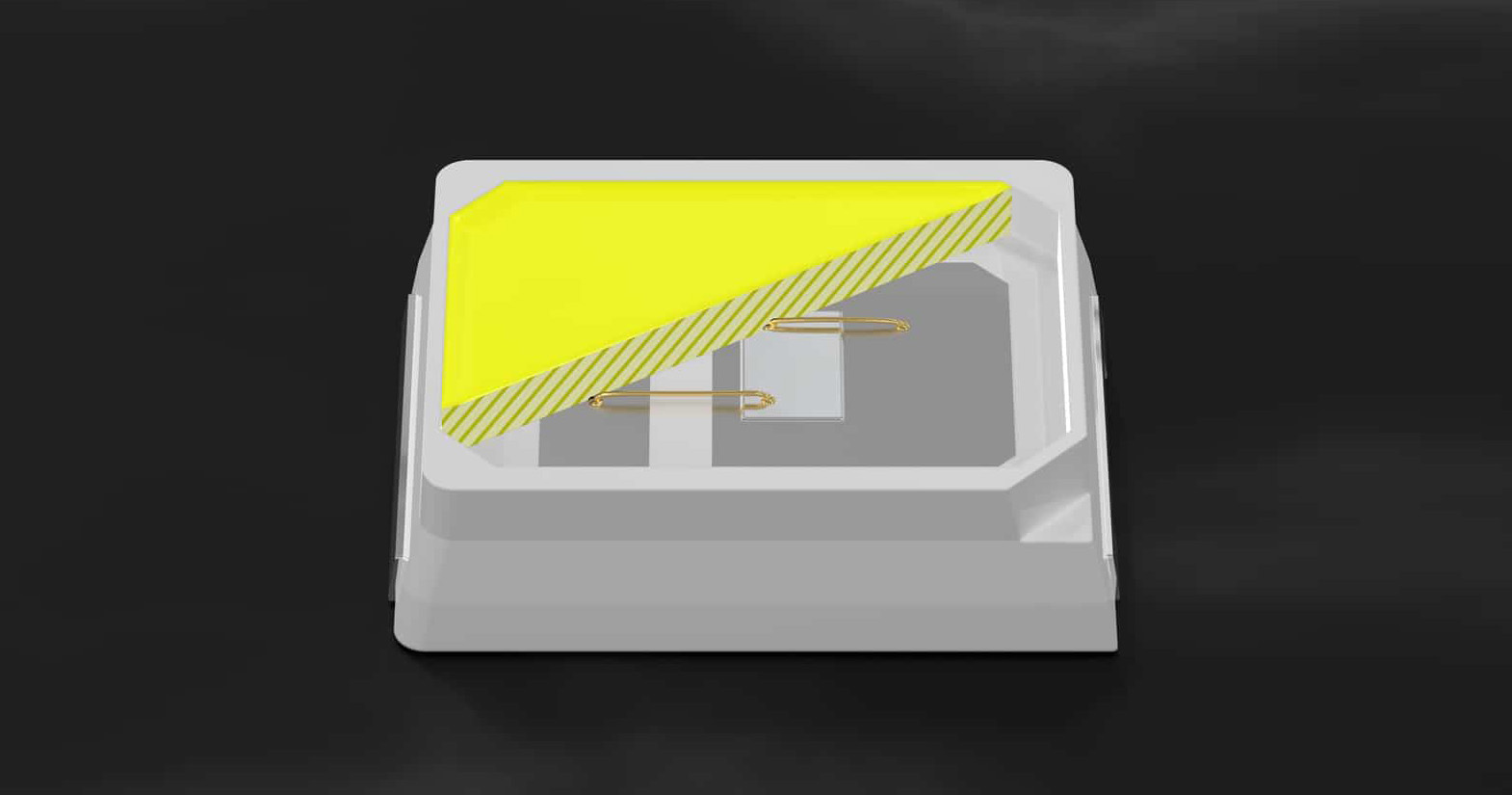
Gold bonding wire supports corrosion resistance, but LED strip reliability also depends on package quality, current control, thermal design and installation.
Understanding material selection, electrical design and the checks that matter before you buy.
Engineering summary
Gold bonding wire offers good corrosion resistance, but reliable LED strips need more than one material choice. Evaluate the LED package, current control, thermal design and installation together. A dark section is a symptom—not proof of a failed bond wire. [1][4]
This guide focuses on low-voltage, constant-voltage LED strips using wire-bonded SMD LEDs. It explains what a gold-wire specification tells you, how to verify it and what else affects reliable operation.
1. What Does Gold Bonding Wire Contribute?
Inside a wire-bonded LED package, fine wires form electrical connections between the LED die and the package terminals. These internal connections are separate from the solder joints that attach the packaged LED to the flexible printed circuit board, or FPCB.
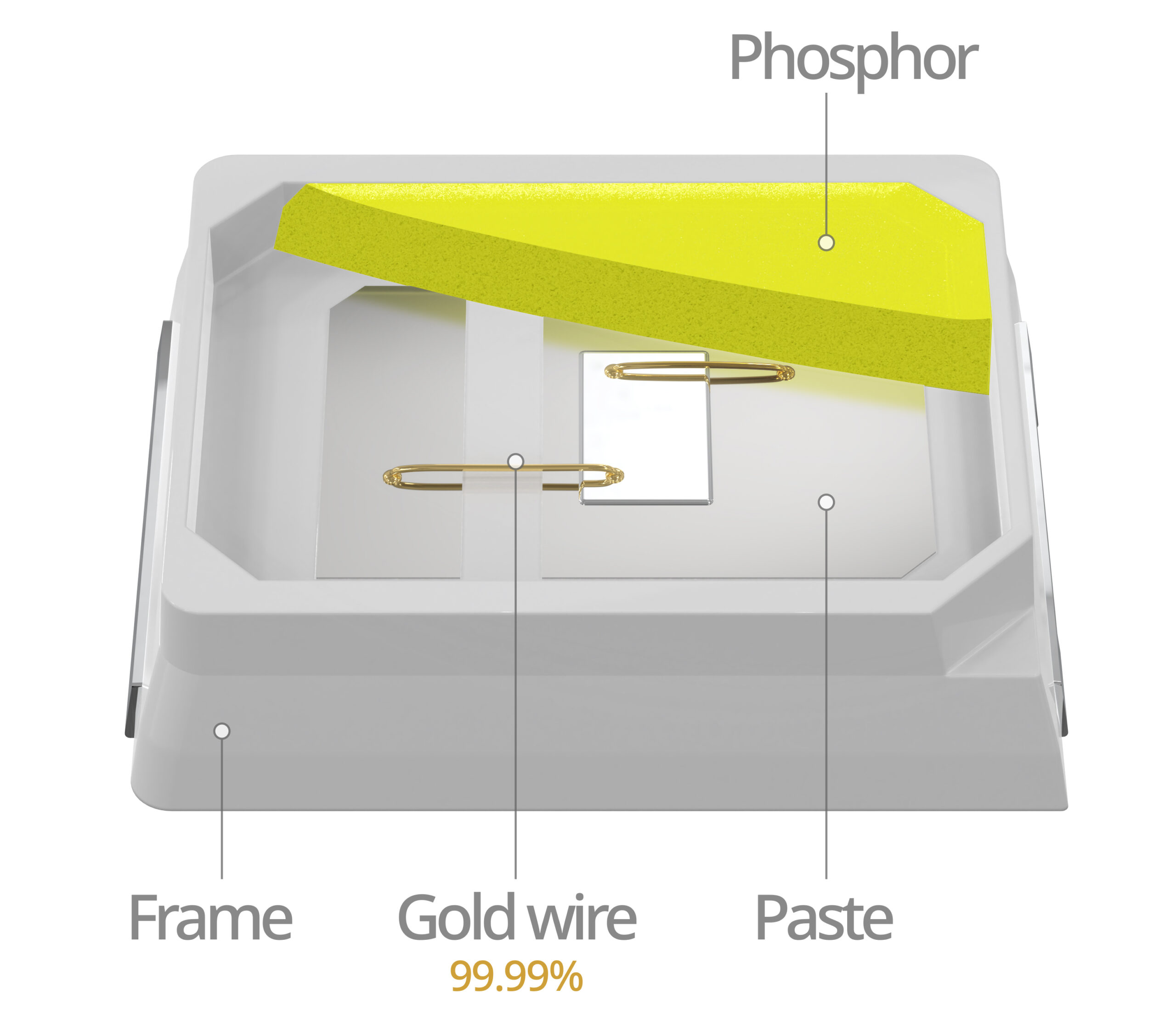
Gold combines good electrical conductivity with corrosion resistance. Specifying 99.99% gold bonding wire gives buyers a defined material requirement to verify during sourcing. [1]
However, purity describes the wire material—not the quality of every bond or the lifetime of the finished strip. Review the material specification alongside the LED package construction, bonding process and relevant qualification records. [1][4]
2. Gold, Alloy and Copper Wire: What Should You Compare?
The useful comparison is not simply “expensive wire versus cheap wire.” Different materials require suitable package designs and process controls. [1][2][3]
| Material | Relevant characteristics | What buyers should confirm |
|---|---|---|
| Gold wire | Good electrical conductivity and corrosion resistance. | Specified purity, LED part number and supporting material documentation. [1] |
| Silver-alloy or gold-coated silver wire | Distinct material constructions; a coating is not the same as a solid-gold wire. | Base material, alloy composition, coating and package qualification. [3] |
| Copper or coated copper wire | Good conductivity and lower material cost than gold; bonding requires suitable oxidation and process control. | Exact wire construction and qualification for the intended LED package. [2] |
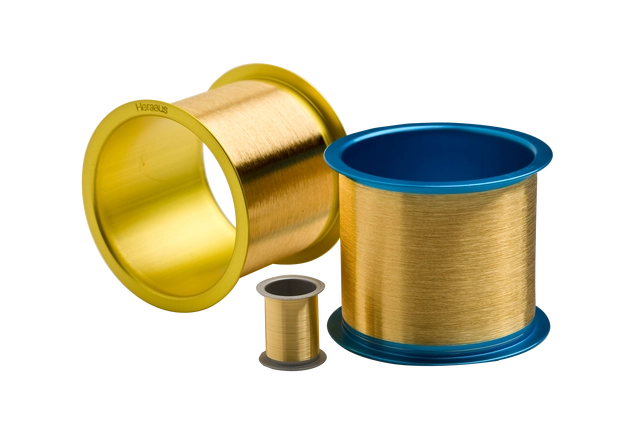
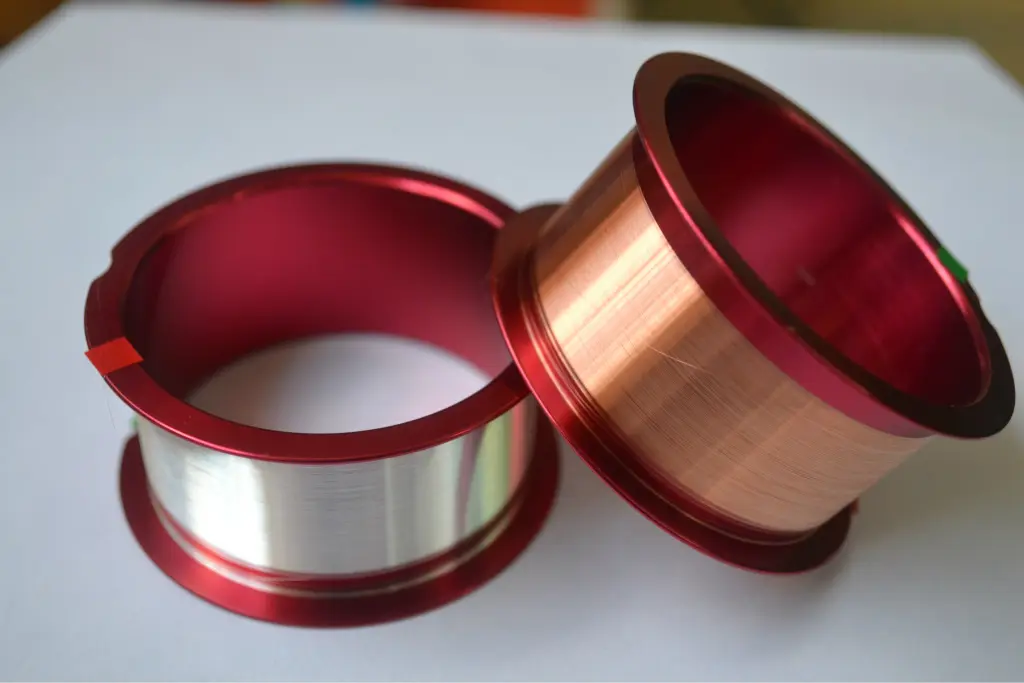
Bonding-wire material illustrations. Reel photographs are not evidence of the wire used in a particular LED batch.
For procurement, request the material specification for the proposed LED rather than treating “alloy wire” as a complete description. A lower material price alone is not a reliability verdict. [2][3]
3. How Can You Verify a Gold-Wire Specification?
Start by requesting a written material declaration tied to the LED part number and, where available, production-lot traceability. This connects the claim to an identifiable component rather than a generic catalogue statement.
Microscopic inspection can show exposed wires and bond sites, but a gold-coloured appearance does not establish 99.99% purity: gold-coated alternatives also exist. [3]
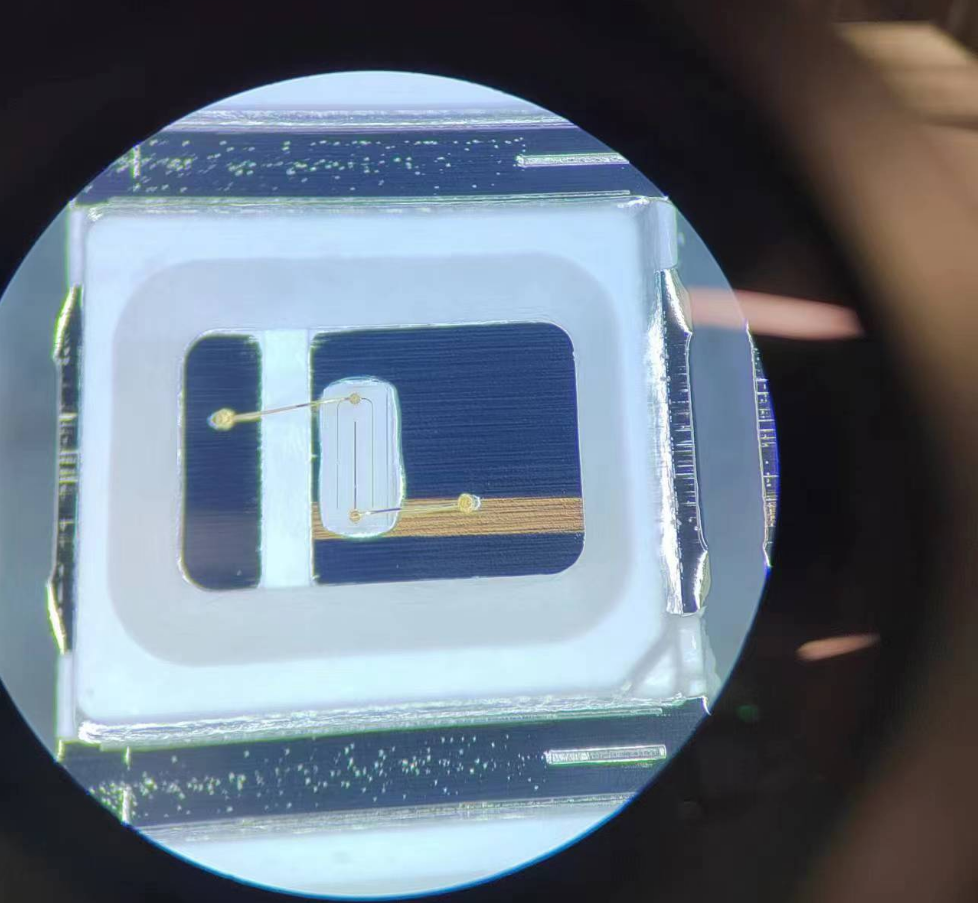
When independent verification is needed, ask a qualified laboratory to select an analytical method suitable for the fine wire and any coating. Agree the sample preparation and the claim being tested before commissioning the analysis. Material identification and bond-quality assessment answer different questions; request evidence appropriate to each.
4. What Else Can Cause an LED Strip to Fail?
An interrupted electrical path
In a simple series-connected section, an open circuit in an LED, solder joint, conductor or another series component can stop that section operating. This follows from the circuit arrangement; it does not identify which component failed. Check the actual circuit before attributing a dark section to an internal bond. [5]
Incorrect supply or current conditions
Use the strip’s specified supply voltage and select sufficient power capacity for the installation conditions. A constant-voltage supply’s higher available current rating does not, by itself, force extra current through the strip. An overloaded supply may limit output, cycle or shut down, depending on its protection design. [5][6]
Voltage drop and feed layout
Resistor-limited sections change current as local voltage changes; sections with onboard current regulation need sufficient voltage headroom to maintain their set current. A dim far end is not proof that the near-end LEDs are overdriven. [5][7]
Inadequate heat dissipation
Evaluate temperature in the intended installation, including the mounting surface, thermal contact and ambient conditions. An aluminium profile can assist cooling, but its presence alone does not establish adequate thermal performance. Follow the LED manufacturer’s measurement guidance; surface temperature is not the same as junction temperature. [9]
As a design check, review feed locations, conductor dimensions and connection ratings together. Extra feeds can reduce voltage drop, but recheck the supply and total load after changing the layout. Do not raise voltage beyond the strip’s specified range to compensate for a dim end. [8]
Handling and environmental exposure
Disconnect power before cutting or rewiring, follow the model’s cutting and bending instructions, and do not operate the strip tightly coiled on its reel. [8] Check nearby materials for compatibility with the LED package: for example, sulfur-containing contaminants can affect exposed silver-plated parts, even when the bonding wire is gold. [10]
5. What Should Support a Five-Year Warranty?
A five-year warranty should be assessed against the written terms, product specification and permitted operating conditions for the selected model. Gold-wire content is one part of the specification, not a standalone guarantee of service life. [4]
An LED emitter’s LM-80 report describes maintenance performance under stated test conditions. It does not, on its own, establish the lifetime of the complete strip installation, including its connections, power supply and other materials. [4]
Before ordering, request the model’s electrical ratings, FPCB copper specification, recommended feed length, mounting requirements and applicable warranty terms. For a DENO model specified with 99.99% gold bonding wire, confirm that requirement in the model-specific documentation.
Frequently Asked Questions
Does gold wire guarantee a longer-lasting strip?
Not by itself. Compare actual package qualifications and operating conditions, not wire material alone. Gold’s corrosion resistance is useful, but complete-product reliability includes other components and failure mechanisms. [1][4]
Can an aluminium profile or extra feed point repair a failing strip?
These changes may address cooling or voltage-drop problems, but they are not substitutes for diagnosing failed components. Check the proposed changes against the product instructions rather than promising a particular extension of service life. [8][9]
Discuss Your Project with DENO
Share your required voltage, run length, mounting arrangement, dimming method and installation environment. Request a proposed model with clear material specifications and operating limits, so the quotation can be assessed against your actual project.