How Long Do LED Strip Lights Last? L70, L80 and What Kills Them
By DENO LED Lighting ·
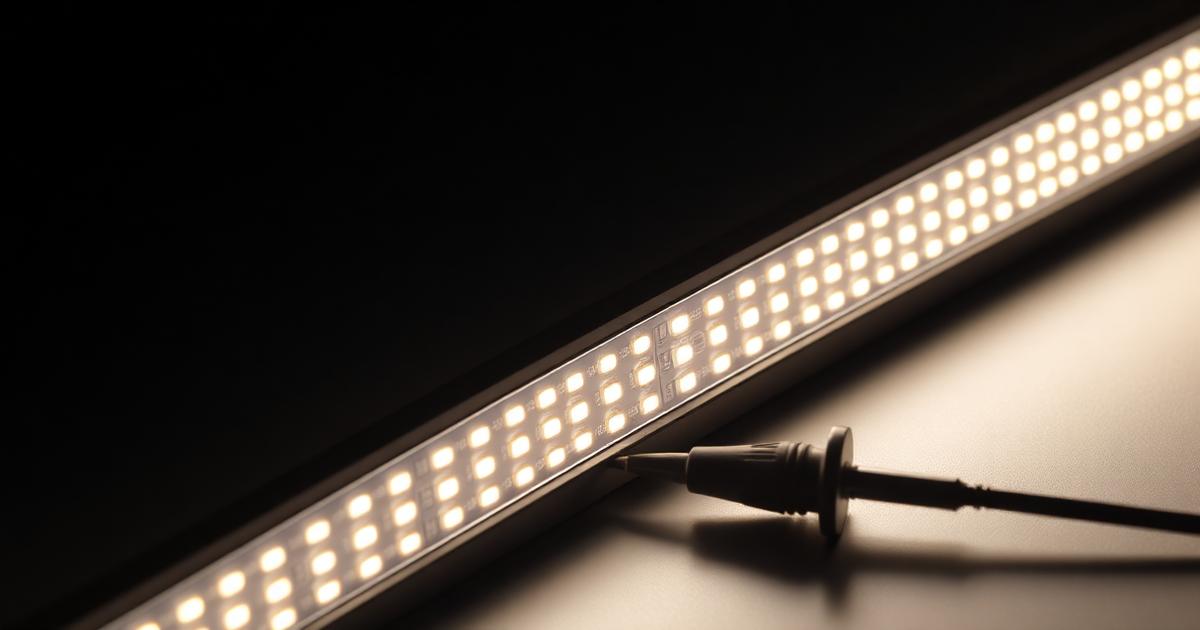
Quality LED strip lights are rated 50,000 to 100,000 hours at L80. Here is what those numbers actually mean, and the four site conditions that cut them in half.
A well-built LED strip light is rated for 50,000 to 100,000 hours. At 12 hours a day, 50,000 hours is roughly 11 years. But that number is a laboratory rating measured under controlled temperature — the service life you actually get is decided by the installation.
What L70 and L80 mean
LEDs do not switch off at end of life; they fade. L70 is the point where output has fallen to 70% of the original, L80 to 80%. A strip quoted at "50,000h L80" is a stronger product than one quoted at "50,000h L70" — always compare the same metric.
The four things that actually shorten life
Heat. Junction temperature is the dominant factor. A strip stuck to plasterboard with no heat path will age far faster than the same strip in an aluminium profile. Always mount continuous runs in an aluminium LED profile .
Thin copper. A 1oz FPCB carries heat away poorly and drops more voltage. Our strips use 2oz copper as standard, and 35+70μm on high-output models.
Driver quality. In most field failures the strip is fine and the driver is dead. Electrolytic capacitors are the weak point, and they degrade fastest when the driver runs hot and near full load.
Overdriving. Running an LED at the top of its current window buys lumens and spends hours. High-efficacy LED strip lights reach the same output at a lower drive current, which is why they age more slowly.
Colour stability is part of lifespan
A strip that still emits light but has shifted green is a failure on any architectural project. Binning tolerance is what holds colour together over time — our 1 SDCM LED strip lights are binned to a single-step MacAdam ellipse so a batch stays consistent through its whole life.
Wet and harsh locations
Moisture ingress at cut ends and connectors ends more installations than LED degradation does. For exterior, humid or saline environments, specify a fully potted, marine-grade LED strip light rather than a standard IP65 sleeve.
Getting the full rated life
Heat-sink the run, size the driver with 20% headroom, and keep the ambient temperature inside the datasheet window. Our team will review your section detail and confirm the expected L80 hours for any model in the LED strip light catalogue .